 Jetway
If you've been putting off algae removal for your driveway in Hope Mills, NC, that greenish tint or dark streaking along shaded edges is not just a cosmetic issue. Moss and algae growth on concrete and pavers creates a genuine slip-and-fall risk, especially during the wet months that Hope Mills sees regularly throughout spring and fall. Most homeowners delay dealing with it because it does not look serious until someone actually slips, by then, the problem has usually been building for months.
Understanding what causes biological growth on driveways, why it gets dangerous, and what actually removes it for good is worth knowing before you end up with a real problem on your hands.
#Why Does Biological Growth Make Concrete So Slippery?
Concrete and pavers become slippery when moss and algae are present because these organisms produce a thin, wet biofilm on the surface. That film acts almost like a lubricant between a shoe or tire and the ground. When the surface is dry, you may not notice much. The moment it gets wet from rain, dew, or even a garden hose, that biofilm becomes extremely slick. According to the CDC's National Institute for Occupational Safety and Health, slips and falls on outdoor surfaces are among the leading causes of emergency room visits, with driveways, walkways, and entry paths among the most commonly affected areas.
What makes moss particularly hazardous is that it holds moisture. Even after rain stops, moss stays wet far longer than bare concrete does. So a shaded section of your driveway with moss growth can remain slippery for hours after everything else has dried out. You may not even register the risk because the surface looks the same whether it is wet or not.
Algae presents a slightly different problem. It often starts as a faint green or black discoloration that blends into the concrete color, especially on older or stained surfaces. Homeowners frequently mistake it for dirt or ordinary weathering. But unlike dirt, algae is alive and actively producing that slick biofilm layer every time moisture is present.
#What Are Your Options for Handling Algae and Moss on a Driveway?
There are a few approaches people take, and they are not all equally effective. Here is a straightforward comparison:
| Approach | What It Does | Limitations |
|---|---|---|
| Garden hose rinse | Removes loose debris and light surface dirt | Does not penetrate or kill biological growth; algae returns quickly |
| Consumer-grade pressure washer | Can blast away surface moss and some algae | Often lacks the pressure or heat to remove root-level growth; can damage pavers if misused |
| Bleach or vinegar DIY treatment | Kills surface algae on contact | Inconsistent results on porous concrete; can harm nearby plants and grass; fumes are a concern in enclosed areas |
| Professional pressure washing with appropriate detergent | Removes biological growth at the surface and subsurface level using proper equipment and chemical application | Costs more upfront than DIY, but results last significantly longer |
The core issue with most DIY approaches is that they deal with what is visible on the surface but leave behind the spores, root structures, and moisture-holding organic matter embedded in the pores of the concrete. Within a few weeks, especially after a rain event, the growth comes back. Professional driveway and concrete cleaning addresses the underlying biology, not just the top layer you can see.
Professional-grade pressure washing equipment typically operates at pressures and flow rates that consumer machines cannot match. Combined with a surfactant or algaecide applied before washing, the cleaning actually breaks down the biological material rather than just pushing it around. The University of Missouri Extension notes that surface biofilm management on outdoor hard surfaces requires both mechanical removal and chemical treatment to be effective long-term. Doing only one without the other tends to produce short-lived results.
In Hope Mills, NC, the combination of humid summers, tree cover in many neighborhoods, and clay-heavy soils means driveways here are particularly prone to this kind of growth. Shaded portions of a driveway that do not get much direct sun are especially vulnerable. If you have large trees near your driveway or your home faces north, you are dealing with the conditions that moss and algae prefer most.
One thing worth paying attention to: if you have pavers rather than poured concrete, the approach matters even more. High-pressure washing applied incorrectly to pavers can dislodge the sand between joints or chip edges. A professional who understands the difference between concrete and paver surfaces will adjust pressure, nozzle angle, and distance accordingly.
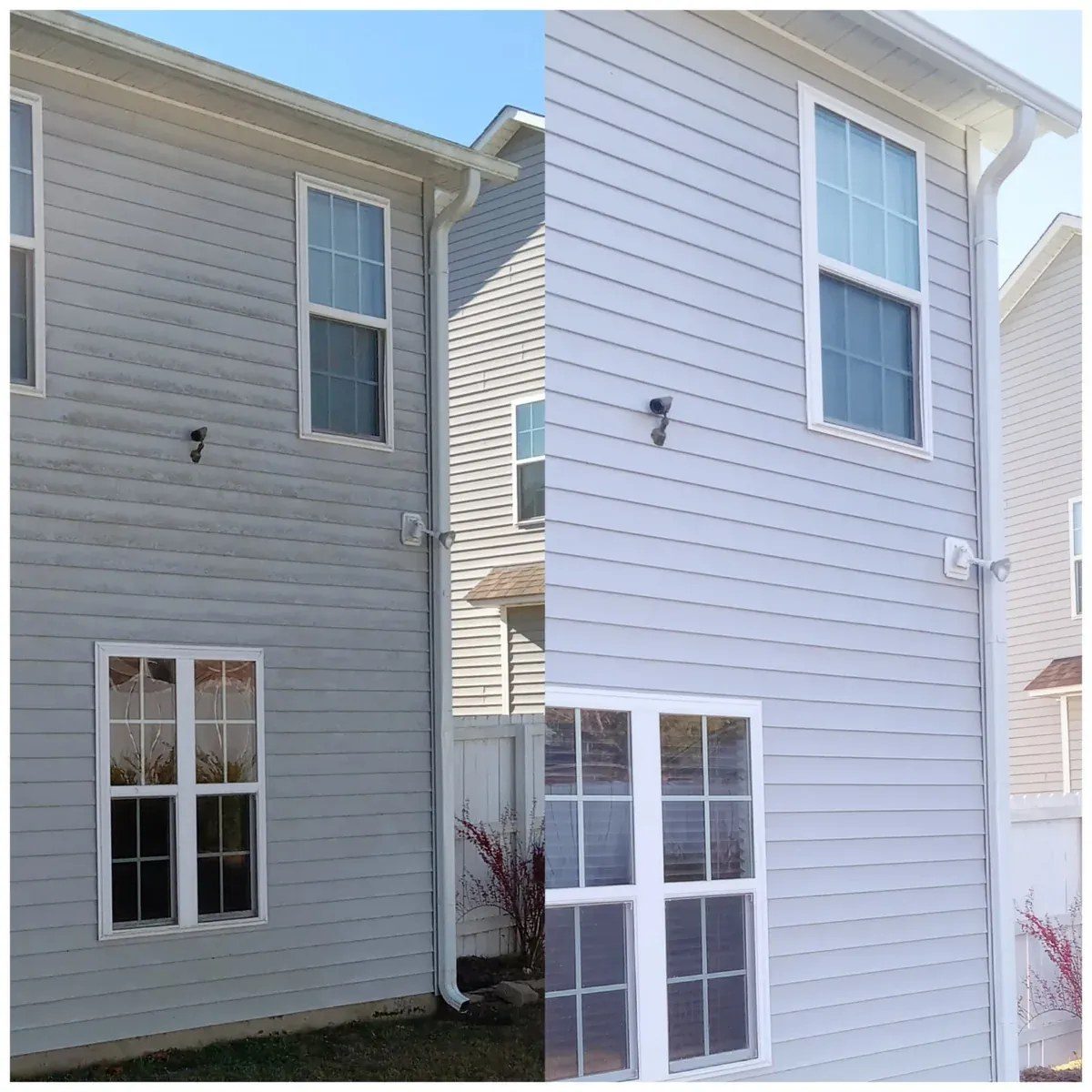
It is also worth noting that algae does not always stay on the driveway. Spores travel, and if your roof or siding is already showing discoloration, you may be dealing with the same biological growth in multiple places. House washing alongside driveway cleaning can address the problem more thoroughly than treating each surface in isolation.
If your driveway has developed green or black growth and you are in the Hope Mills area, Jetway Pressure Washing and Cleaning Service handles concrete and paver cleaning and can assess what you are working with. Contact us through the website or by phone to discuss what the job would involve.