 Jetway
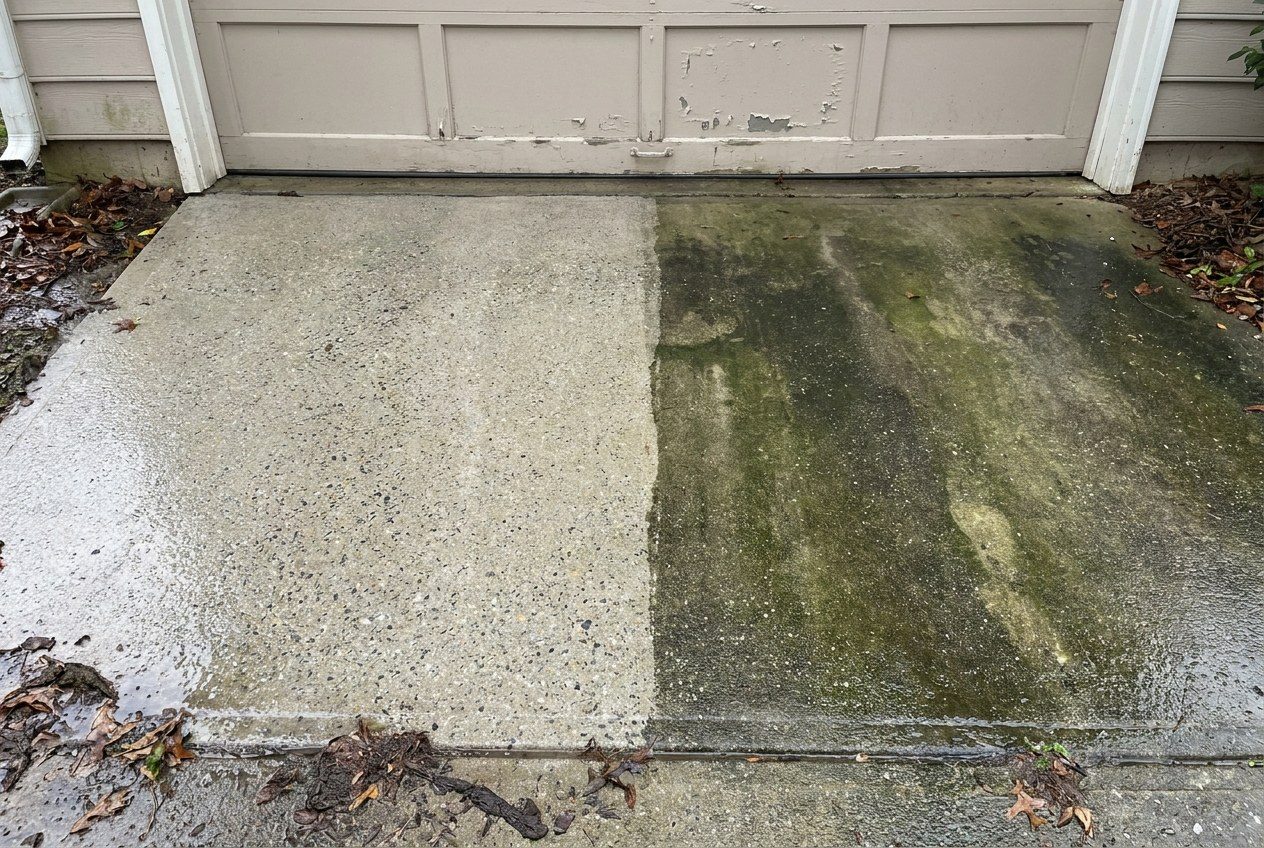
Cleaning concrete expansion joints in fall in Hope Mills, NC is one of those maintenance tasks that looks minor until you understand what packed joint debris does to concrete over a winter. Those straight, narrow gaps running across your driveway, patio, or sidewalk every few feet are expansion joints, cut or formed into the slab to give it room to move without cracking as temperatures change. But that gap is also a perfectly shaped trap for everything fall drops on your property.
Leaves break down quickly once they get wet. By the time they land in a joint, tumble in a breeze, and get rained on a few times, they are already fragmenting into small, soft pieces that compact easily. Add wind-blown soil, pine needles, grass clippings from the last few mows of the season, and the airborne seeds that every tree and weed sheds in autumn, and you end up with a joint that is not just dirty, it is biologically active.
That combination of organic matter, trapped moisture, and seeds is exactly what makes fall debris in concrete joints a real problem, not just an eyesore.
#What Exactly Accumulates in Expansion Joints During Fall?
Three things fill joints during fall, and they work together in a way that makes each one worse.
- Leaf fragments and organic fines: Whole leaves rarely stay in a joint, but they break apart on contact. The small bits sift down into the gap and compact against the filler material or the concrete edges themselves.
- Wind-blown soil and fine debris: Fall winds carry dust, topsoil, and fine particles that settle into any low point on a hard surface. Expansion joints are low points by definition.
- Seeds: Weed seeds, tree seeds, and grass seeds are shed heavily in autumn. They are light, small, and shaped to travel. An expansion joint gives them shelter, moisture, and organic matter to germinate in, a better growing environment than bare soil in many cases.
Once these three things combine and get rained on repeatedly through October and November, the joint goes from a gap to a packed channel of damp organic material sitting right against your concrete edges.
#How Does Debris in Expansion Joints Damage Concrete Over Winter?
Packed organic matter holds moisture the way a sponge does. Concrete is porous, and the edges of an expansion joint are exposed on two sides. When water-saturated debris sits in contact with those edges through a freeze-thaw cycle, water works its way into the concrete, freezes, expands, and widens microcracks that were already there.
Hope Mills, NC does not get the sustained deep freezes of northern states, but the region does see repeated freeze-thaw cycles through winter, temperatures that dip below freezing at night and rise above it during the day. According to the National Weather Service Raleigh office, the Fayetteville area, which includes Hope Mills, averages multiple freeze events each winter. Each one is a cycle that can work moisture deeper into concrete edges.
Over a single winter this may not be dramatic. Over three or four winters with joints that never get properly cleaned, the edge deterioration adds up. Joint edges begin to spall or crumble, which widens the gap, which collects more debris the following fall. The cycle accelerates.
There is also the spring weed problem. Seeds that sat dormant in packed joint debris all winter germinate as soon as temperatures rise. Weeds growing in expansion joints are not just cosmetic, their roots exert outward pressure on the concrete edges and can widen the joint over time. The driveway and concrete cleaning process addresses both the surface and the joints in one visit, which is why bundling the work at the end of fall makes practical sense.
#DIY vs. Professional Cleaning: What Can Each Actually Accomplish?
| Approach | What It Removes | What It Misses | Best For |
|---|---|---|---|
| Broom or hand tool | Surface debris, loose leaves, dry soil at the top of the joint | Compacted organic material deeper in the joint, seeds embedded in damp debris | Light maintenance after a single debris event |
| Garden hose | Some loose fines if water pressure is adequate | Packed debris, anything wedged against the joint filler | Rinsing after broom work, not primary cleaning |
| Professional pressure washing | Compacted organic debris, embedded soil, surface biofilm on concrete edges | Debris below a deteriorated or missing joint filler (a separate repair issue) | End-of-season cleaning before freeze-thaw cycles begin |
A broom is worth using for maintenance after a single storm or leaf fall. But by mid to late fall, after weeks of debris accumulation and rain cycles have compacted material into the joint, a broom is working on the top layer only. The packed organic matter farther down the joint does not move without water pressure directed at the right angle.
Professional equipment delivers water at controlled pressure with the right nozzle geometry to flush debris out of the joint rather than just pushing it across the surface. That distinction matters when you are trying to clear material that has been wet-packed for several weeks.
#Is Fall the Right Time to Clean Expansion Joints in Hope Mills, NC?
Yes, and the window is more specific than just "sometime in fall." The goal is to clean after the bulk of leaf and debris drop is finished but before the first hard freeze locks moisture into the joint. In the Hope Mills area, that generally means late October through November is the practical window for most properties.
Cleaning too early means debris continues to accumulate and you end up with the same problem by December. Waiting until after a hard freeze means the debris is already acting as a moisture trap through the first part of winter. Timing the cleaning right is the whole point of treating this as a seasonal task rather than a whenever-you-get-to-it one. If you are already scheduling fall exterior work, pairing concrete joint cleaning with house washing at the end of the season covers both surfaces in one visit.
Run a finger along one of your expansion joints. If what comes up is dry and crumbles loose, a broom pass may be enough for now. If it is damp, compacted, or you can feel matted material that does not come free easily, you are past the point where surface tools will solve it.
#What Happens If You Just Leave the Joints Packed Through Winter?
Leaving packed joint debris through winter is not a neutral choice. The moisture retention continues through every freeze-thaw event. The seeds overwinter and germinate in spring. The organic matter breaks down further, making the joint an even better growing medium the following fall. Each year the problem is easier to leave than to address, and each year the concrete edges pay a small cost that accumulates over time.
For most homeowners, one season of neglect will not ruin a driveway. But if you are looking at joints that have not been properly cleaned in three or four years and you can already see early weed growth or edge spalling, the cost of doing nothing is starting to show. Cleaning now and making it a fall habit going forward is a straightforward way to get ahead of that curve.