 Jetway
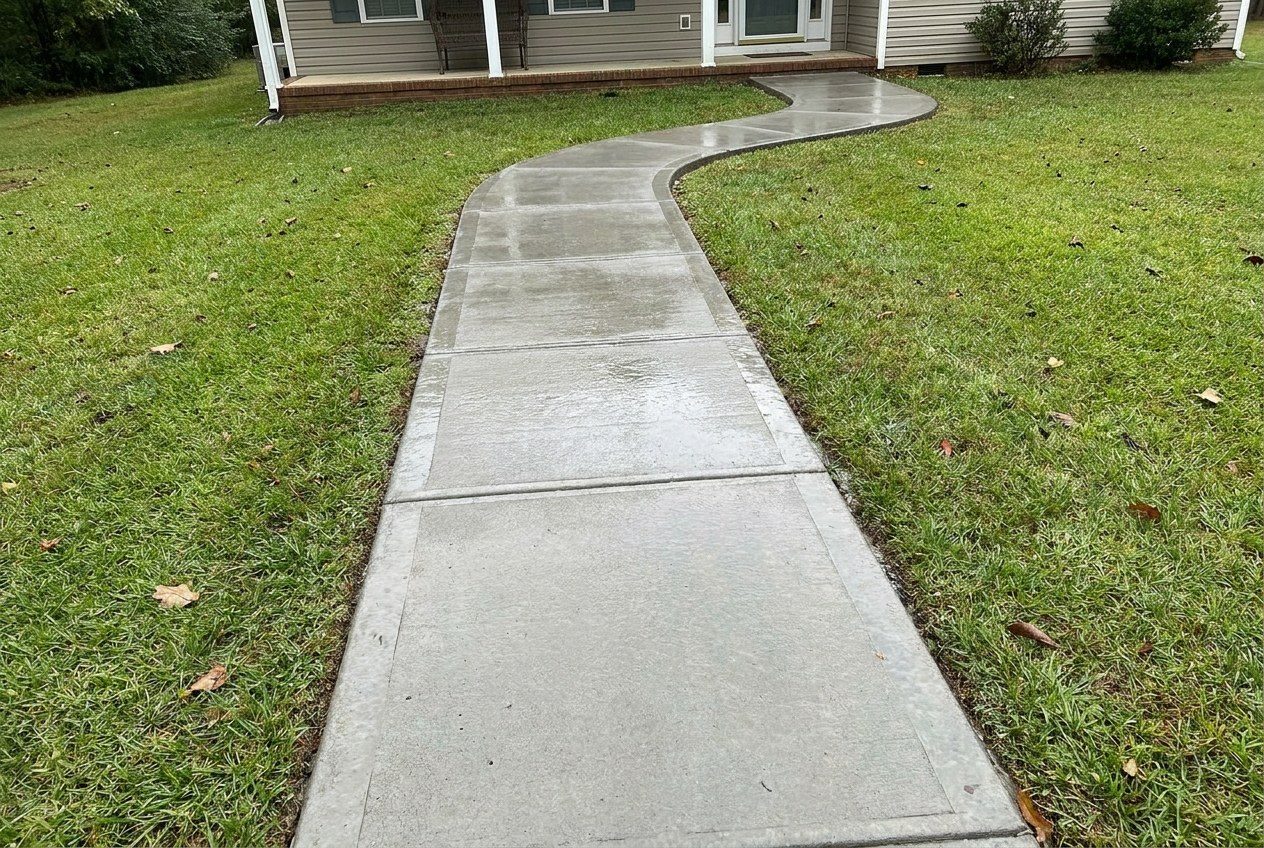
- Wet leaves, algae, and biofilm are the main reasons concrete sidewalks become dangerously slick in fall, and they build up faster than most homeowners notice.
- Biofilm is nearly invisible on dry concrete but turns the surface into something close to wet glass once rain or dew hits it.
- Pressure washing removes the actual biological material causing the slip hazard, not just the surface dirt sitting on top of it.
- Fall in Hope Mills, NC brings the specific combination of moisture, shade, and decaying organic material that accelerates algae and mold growth on concrete.
- Waiting until spring to clean means several months of preventable risk on a surface people walk every day.
A slippery concrete sidewalk fall in Hope Mills, NC is not a freak accident, it is usually the predictable result of biological growth that built up on the surface over weeks or months without anyone noticing. Your sidewalk looks fine on a dry afternoon. Walk across it the morning after rain, when the leaves are down and the temperature has dropped into the 50s, and the story changes completely. That same flat concrete becomes surprisingly unstable underfoot, enough to catch someone off guard mid-step.
This happens every fall, and it is not random. There is a specific chain of events that turns ordinary concrete into a slip hazard, and once you understand it, the fix makes obvious sense.
#What Actually Makes Concrete Slippery in the Fall?
Three things are doing most of the work: wet leaves, algae, and biofilm. Each one is a problem on its own. Together, they compound quickly.
Wet leaves seem obvious, but people underestimate them. A single layer of wet leaves on concrete acts like a layer of wet cardboard. The surface below loses all friction. Leaves also trap moisture against the concrete for extended periods, which creates exactly the warm, damp, shaded environment that algae and mold need to grow.
Algae is the green or black streaking you notice on older concrete. It is a living organism that colonizes porous surfaces wherever moisture lingers. Concrete is porous by nature, so it holds moisture longer than it appears to from the outside. Once algae takes hold, it holds even more moisture, which feeds continued growth.
Biofilm is the one most people have never heard of, and it is probably the most dangerous of the three. Biofilm is a thin, nearly transparent layer of microbial growth, bacteria, algae, and fungi, that forms on wet surfaces. On dry concrete it is almost invisible. Once water hits it, it becomes slicker than ice in some conditions. You cannot see it coming.
According to the Centers for Disease Control and Prevention, falls are the leading cause of injury-related emergency department visits for adults. Outdoor slip hazards on residential property, including concrete walkways with algae and biofilm growth, are a significant contributor to that number.
#Why Does Fall in Hope Mills, NC Make Concrete Especially Hazardous?
Hope Mills sits in a part of North Carolina where fall weather is genuinely unpredictable. You get warm afternoons, cool nights, and regular rain. That temperature swing means morning dew is heavy and frequent. Concrete that dries out in the afternoon is wet again by sunrise.
Add tree cover. Many older neighborhoods in Hope Mills have mature trees that drop significant leaf loads onto sidewalks, driveways, and entry paths. Those leaves do not always blow off on their own, they mat down, hold moisture, and sit in contact with concrete for days at a time. That is ideal growing conditions for algae and biofilm.
Shaded north-facing sidewalks are the worst. Sun never quite hits them long enough to fully dry the surface, so moisture accumulates in the pores of the concrete across the entire season. By November, a sidewalk like that can have several months of biological growth that is not going anywhere on its own.
| Hazard | Why It Is Slippery | Visible to the Eye? | Does Pressure Washing Remove It? |
|---|---|---|---|
| Wet leaves | Acts as a low-friction layer between foot and concrete | Yes | Yes, clears surface debris and flushes residue from pores |
| Algae | Biological growth that holds moisture and reduces surface grip | Often (green or black staining) | Yes, high-pressure water breaks down and removes the growth |
| Biofilm | Near-invisible microbial layer that turns slick when wet | Rarely on dry concrete | Yes, requires adequate pressure and volume to fully lift |
| Mold and mildew | Fuzzy growth that traps moisture and softens the walking surface | Sometimes (dark spotting) | Yes, surface treatment and rinsing removes active growth |
#Does Pressure Washing Actually Fix a Slippery Sidewalk?
Yes, and it works precisely because it removes the biological material that is causing the problem, not just the dirt sitting on top of it. A garden hose moves surface debris around. Pressure washing at the right PSI penetrates the pores of the concrete and flushes out the algae, biofilm, and organic residue that has worked its way in over months.
There is a meaningful difference between surface cleaning and actual remediation. Raking leaves off a sidewalk helps visually, but the biofilm underneath stays put. Sweeping moves dry debris but does nothing to living growth. Pressure washing at the appropriate pressure level physically dislodges and removes the material causing the hazard. The same process that makes driveway and concrete cleaning effective on oil stains and embedded grime applies directly to biological growth on sidewalks, you are not moving the problem, you are removing it.
Run your hand along a shaded section of your sidewalk after a light rain. If it feels slimy or greasy, biofilm is present. If you see dark spotting or a greenish tint near the edges, algae growth is already established. Either condition will get worse through the fall and winter, not better.
#Can You Wait Until Spring to Clean the Sidewalk?
You can, but doing so means several months of elevated slip risk on a surface that sees daily foot traffic, family, guests, delivery drivers, anyone walking to the door. That is a long window for an avoidable incident.
There is also a practical reason to clean in fall rather than spring: you are removing the organic material before it has a full winter to work deeper into the concrete. Algae and mold that sit through winter do not die off completely, they go dormant and resume growth as soon as temperatures rise. Cleaning in fall interrupts that cycle earlier.
Spring cleaning makes sense as a maintenance step. But if your sidewalk already has visible algae, biofilm, or heavy leaf