 Jetway
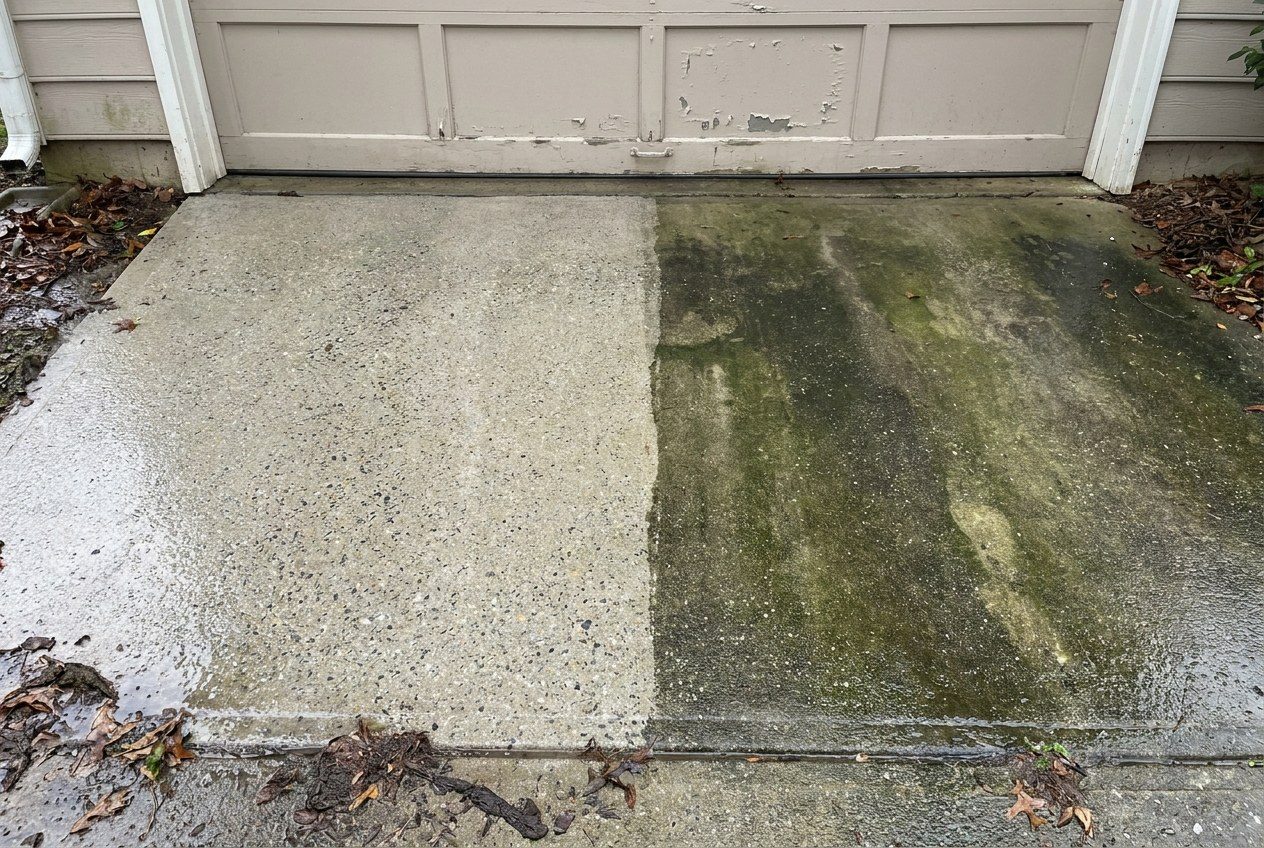
- Acorns and sweetgum pods release tannins and other organic compounds that oxidize into dark, stubborn stains on concrete driveways and walkways.
- The longer these stains sit, the deeper the tannins bond with the concrete's porous surface, making early fall treatment the most effective window.
- Light surface staining can sometimes be addressed with household cleaning, but older or widespread staining typically requires hot-water or high-pressure professional cleaning to fully lift.
- Sealing concrete after cleaning creates a barrier that slows future organic staining from fall debris.
- Hope Mills, NC homeowners dealing with heavy tree canopy overhead face this problem every season, and timing the cleaning before winter sets in makes a real difference in outcome.
Acorn stains on concrete driveways are one of the most predictable North Carolina fall maintenance headaches, and if you park under a water oak, willow oak, or sweetgum tree in Hope Mills, NC, you already know what your driveway looks like by late October. Brown rings where acorns sat. Dark, irregular patches where sweetgum pods crushed underfoot. A general gray-brown film that no amount of rinsing with a garden hose seems to move.
This is not dirt. It is oxidized organic material that has worked its way into the surface of your concrete, and it behaves very differently from mud or grease. Understanding what it actually is makes it easier to understand why the cleaning approach matters and why waiting until spring to deal with it is a mistake.
#What Compounds in Acorns and Sweetgum Pods Actually Cause the Staining?
Tannins are the primary culprit. Acorns are exceptionally high in tannic acid, which is the same class of compound used historically in leather tanning because of how aggressively it binds to porous materials. When an acorn sits on concrete, especially after rain softens it or a car tire crushes it, that tannic acid leaches out and begins soaking into the concrete's surface pores.
Sweetgum pods, those spiky brown balls that cover driveways from September through November, contain a similar mix of tannins and phenolic compounds. As they break down, they release a dark brownish-black liquid. On a driveway that sees daily foot or tire traffic, those pods get ground into the surface repeatedly, pressing the compounds deeper with each pass.
Concrete is porous by nature. Uncoated concrete acts almost like a sponge at the microscopic level, and tannin molecules are small enough to penetrate several millimeters into the surface matrix. Once oxidation sets in, the stain shifts from surface-level discoloration to something embedded in the material itself.
According to the U.S. Forest Service, oaks are among the most tannin-rich tree species in North America, which is part of why acorn staining is a recurring maintenance issue anywhere oak canopy is dense. The Piedmont and Coastal Plain regions of North Carolina, including Cumberland County, have abundant native oak coverage, so this is not an unusual problem here. It is a seasonal one that shows up reliably every year.
#How Bad Is the Stain, and Can You Handle It Yourself?
Fresh staining, meaning acorns or pods that have been sitting for a week or two on dry concrete, can sometimes be addressed with a stiff-bristle brush, a diluted oxygen bleach solution, and patience. This is worth trying if the affected area is small and the staining is light and even.
| Factor | DIY Cleaning | Professional Pressure Washing |
|---|---|---|
| Best for | Small areas, fresh stains (under 2 weeks old) | Widespread staining, older oxidized stains, full driveway |
| Equipment needed | Stiff brush, oxygen bleach, garden hose | Hot- or high-pressure washer, appropriate detergent, surface cleaner |
| Effectiveness on oxidized tannins | Limited, often leaves ghost staining | Significantly better, especially with hot water or chemical pre-treatment |
| Risk of surface damage | Low if done carefully | Low when done by an experienced operator at correct pressure |
| Time investment | High, mostly manual scrubbing | Lower, equipment does the heavy work |
Most homeowners who attempt the DIY approach on a full driveway end up with a cleaner surface that still carries visible staining wherever pods concentrated or where the concrete is older and more porous. That is not a failure, it just means the tannins penetrated deep enough that surface scrubbing alone cannot reach them. For those situations, professional driveway and concrete cleaning is the more reliable path to a full result.
#Why Does Timing Matter So Much for Removing These Stains?
Oxidation is the key word. Fresh tannin staining is still relatively close to the surface and has not fully reacted with the concrete's alkaline chemistry. As weeks pass, the tannin molecules cross-link with mineral compounds in the concrete, darkening and setting more permanently.
Rain accelerates this. Each wet-dry cycle drives the compounds a little deeper and speeds oxidation. In a wet North Carolina fall, a stain that might have responded well to cleaning in October can be significantly harder to remove by December. By spring, what was a light brown blotch may be a gray-black patch that will not fully lift regardless of what you apply.
If you can clear the debris and begin cleaning while the stains are still in that reddish-brown phase rather than a dark gray-black, you are working with the best possible odds. Once they go dark and dull, you are fighting a different battle.
#What Does a Professional Cleaning Actually Do That a Garden Hose Does Not?
Pressure and chemistry together move tannin stains in a way that water alone cannot. A surface cleaner attachment run at the right pressure agitates the concrete uniformly and lifts material from the pores rather than just washing across the surface. On tannin stains specifically, a pre-treatment with an alkaline detergent or a dedicated organic stain remover breaks down the compounds before the pressure washing pass, which dramatically improves the result.
Hot water helps too. Not every pressure washing setup includes a heated water option, but on oxidized organic staining, heat softens the bonded compounds and makes them more responsive to both the chemical treatment and the mechanical action of the spray.
The goal is not just a cleaner-looking driveway in the short term. Removing organic material that has begun to break down also eliminates the food source for mold and mildew that will take hold over winter if debris is left in place. A driveway cleaned in fall goes into the cold months in better shape and comes out in spring without an extra layer