 Jetway
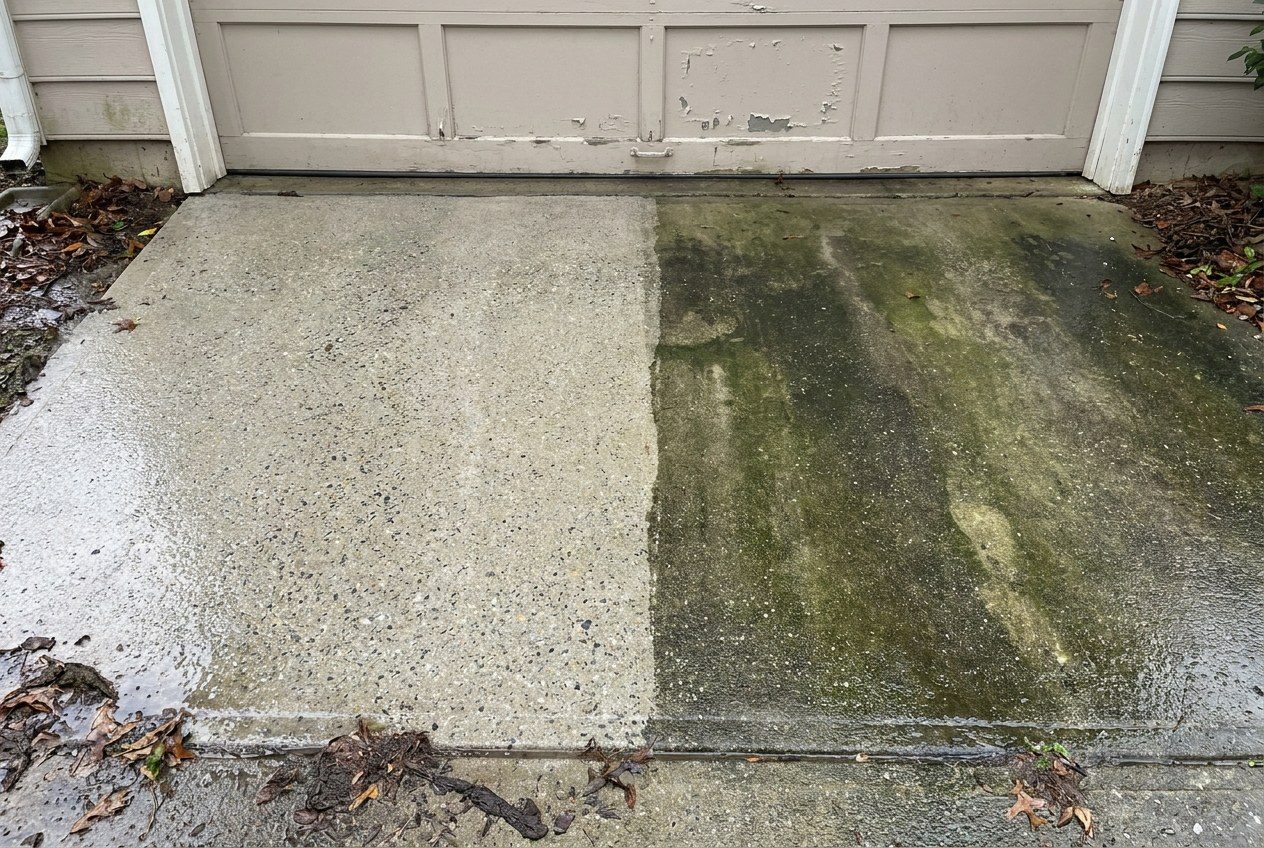
Algae damage to window caulk on your house exterior is one of the most overlooked fall maintenance problems for Hope Mills, NC homeowners. If you have a greenish or black film along your window frames, siding seams, or under your eaves right now, it is not just ugly, it is eating your caulk. Fall in Hope Mills brings cooler nights and more moisture, and that combination accelerates what organic growth has been quietly doing all summer. By the time you notice a water stain on an interior wall, the caulk line outside has often been compromised for months.
Fall is also the right time to stop it. A house wash before winter closes in is one of the more practical things you can do to protect a home exterior. But first, it helps to understand what is actually happening at the surface level.
#What Does Algae Actually Do to Exterior Caulk?
Algae degrades caulk through a combination of biological and chemical processes, not just surface staining. Most exterior caulks are silicone or latex-based compounds that cure into a flexible, water-resistant seal. Algae and mold colonies produce organic acids and enzymes as byproducts of their metabolic activity. Those compounds work into the surface of caulk over time, breaking down the polymer chains that give it elasticity and adhesion.
Caulk that has been colonized by algae or mold for more than one season tends to feel chalky or powdery when you rub it. It may look intact from a few feet away but crumble or crack when you press it with a fingernail. That is the polymer structure breaking down. The surface bond to the window frame or siding is usually the first thing to go, leaving a gap you cannot see from the outside until water has already gotten behind it.
According to the U.S. Department of Energy's guidance on air sealing and home moisture management, gaps around windows and doors are among the most common pathways for unwanted moisture intrusion in residential structures. That moisture, once inside the wall assembly, drives mold growth, wood rot, and insulation degradation. The caulk line is a small detail that carries a lot of responsibility.
#Why Is Hope Mills, NC Particularly Hard on Exterior Caulk?
The climate here is harder on exterior caulk than most homeowners expect. Hope Mills sits in a region with hot, humid summers followed by wet, mild falls and winters that bring repeated freeze-thaw cycles. That combination is rough on any flexible sealant.
Organic growth loves the shoulder seasons here. Temperatures in the 50s and 60s with regular rainfall and morning dew create near-ideal conditions for algae and mold to colonize shaded areas of a home exterior, north-facing walls, under overhangs, around window frames where moisture lingers longest. By October, a home that looked clean in June can have significant biological loading in those spots.
- North and west-facing walls get less direct sun and stay damp longer after rain
- Window frames and sills trap debris and moisture at the caulk line
- Overhangs and soffits are shaded and rarely get the drying effect of direct sunlight
- Gutters that overflow direct water across siding and toward window seals repeatedly
Once temperatures drop below freezing, any water that has worked into a compromised caulk joint expands. That freeze-thaw cycling widens small gaps into real ones fast. If your gutters are contributing to the problem by directing overflow toward your siding and window seals, professional gutter cleaning before winter is worth adding to your fall checklist alongside the house wash.
#How Do You Check Your Own Window Seals Before Winter?
You can do a useful inspection yourself in about twenty minutes with no special tools.
Walk the perimeter of your house and look at every caulk line where window frames meet siding, where trim meets brick or block, and along the bottom edge of siding courses. You are looking for discoloration (green, black, or gray streaking), visible gaps or separation, and any areas where the caulk line has a sunken or concave profile instead of a smooth bead.
| What You See or Feel | What It Likely Means | Action Needed |
|---|---|---|
| Firm, slightly flexible bead with no staining or gaps | Caulk is performing normally | Clean the surface, monitor annually |
| Surface staining (green or black) but caulk still feels firm | Organic growth present, polymer not yet degraded | House wash now to stop degradation before it advances |
| Chalky texture, crumbles under fingernail pressure | Polymer breakdown underway, adhesion failing | Recaulk after cleaning; do not skip cleaning first |
| Visible gaps, separation from frame, or sunken bead | Seal is broken, moisture intrusion likely already occurring | Recaulk promptly, check interior for water damage |
One thing worth knowing: if you find gaps and recaulk without cleaning the underlying surface first, the new caulk will not bond properly. Algae and mold residue on the substrate is a barrier to adhesion. Clean the surface, let it dry fully, then recaulk.
#What Does House Washing Actually Preserve?
A professional house wash, the kind done with low-pressure soft washing and appropriate cleaning solutions, removes the biological material driving the degradation cycle. That includes algae, mold, mildew, and the organic debris that feeds them. It also removes the acid and enzyme residue sitting on caulk surfaces. For Hope Mills homeowners, professional house washing timed before the first hard freeze gives surfaces the best chance of heading into winter clean and sealed.
Washing in fall, before the first hard freeze, gives surfaces time to dry thoroughly. Wet caulk going into a freeze cycle is its own problem. A wash done in October in Hope Mills gives you a reasonable window of dry, mild days before winter conditions arrive. A wash done in December is better than nothing, but the timing is tighter.
What washing does not do is replace caulk that is already structurally compromised. If the bead is chalky or gapped, cleaning it buys no time. The inspection step matters because it tells you whether you need a wash, a wash plus recaulking, or a wash plus recaulking plus a closer look at what may have already gotten behind the surface.
#Is It Worth Washing If the Caulk Already Needs Replacing?
Yes, and the order of operations matters. Clean first, then replace caulk. Applying new caulk over a surface that still carries algae or mold means poor adhesion from day one. The new bead will lift or crack at the edges far sooner than it should, and you will be back in the same position in a year or two instead of five or seven.
Think of the house wash as surface prep, not just cosmetic cleaning. Any contractor doing caulk work on a home