 Jetway
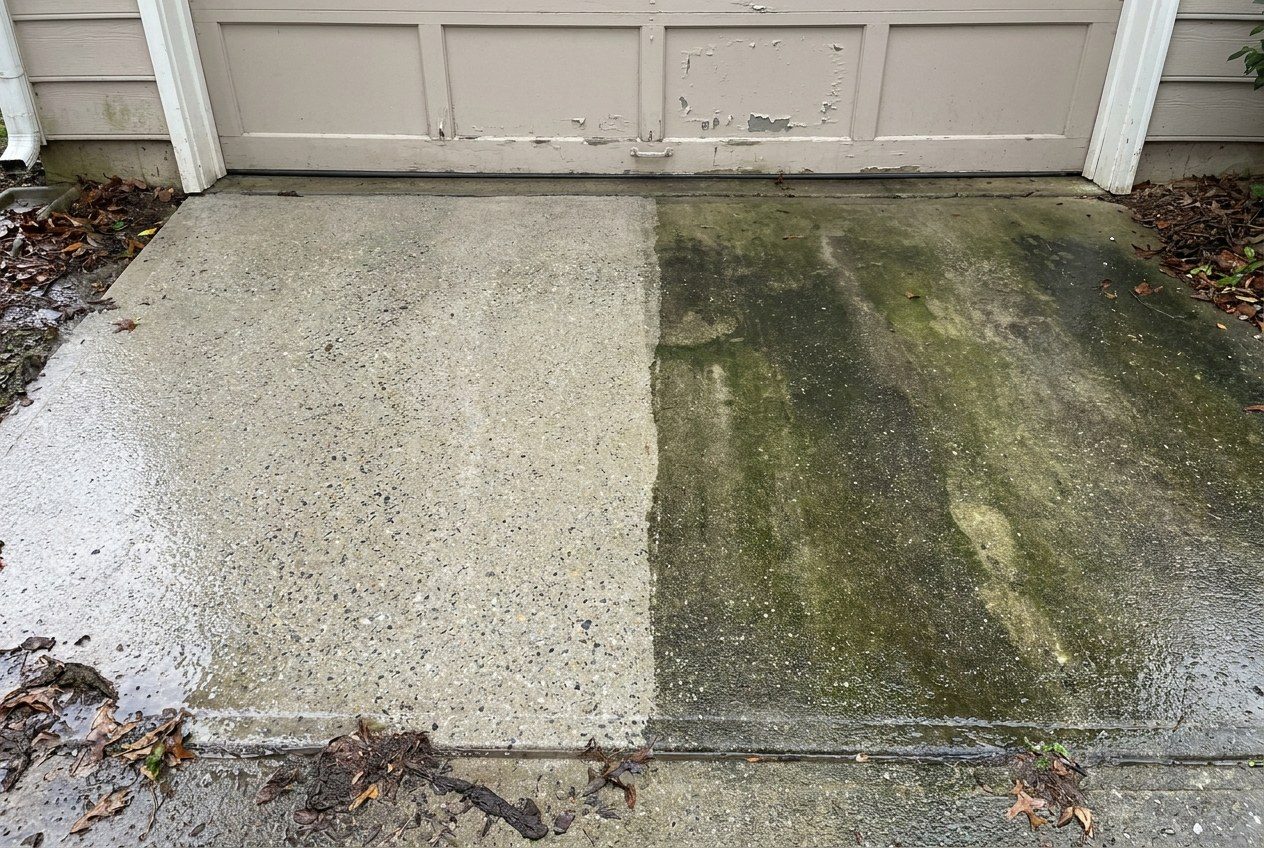
- Algae growth on home siding after fall rain in Hope Mills, NC accelerates because cooler temperatures slow evaporation, giving mold and algae more time to take hold.
- North- and east-facing siding panels stay wet the longest and typically show growth first.
- Algae and mold do not need warm temperatures to grow, they actually thrive once heat drops and shade increases in autumn.
- Cleaning siding before winter breaks the growth cycle before spores have months of cold, damp conditions to spread further.
- A soft wash approach removes live growth at the surface without forcing water behind panels or into seams.
Algae growth on home siding after fall rain in Hope Mills, NC follows a predictable pattern, and understanding why it happens makes it easier to stop. The stretch from October through November lines up almost perfectly with the conditions mold and algae prefer: regular rain, temperatures that stay mild but no longer dry things quickly, and shorter days that reduce the drying power of direct sun. The result is siding that stays damp for hours, sometimes an entire day, at a stretch.
That extended dampness is the real problem. A hard summer rain usually dries off a wall within a couple of hours on a hot afternoon. A fall rain can leave moisture sitting on vinyl, wood, or fiber cement siding well into the next morning, and if another shower comes through before the surface fully dries, the damp window just keeps extending. Algae and mold spores do not need much of an invitation. Given enough sustained moisture and a surface they can grip, they establish quickly.
#Why Do Cooler Temperatures Make the Problem Harder to Reverse?
Cooler air cannot hold as much moisture as warm air, which means evaporation slows significantly once temperatures drop into the 50s and 60s. A siding surface that would dry in an hour on a July afternoon may stay wet for four to six hours on a 58-degree October day, even without cloud cover. Add shade from trees still holding leaves in early fall, and some sections of your home may barely dry out at all between rain events.
Algae species common to the Carolinas are well-adapted to cooler, wetter conditions. The green or yellow-green film you see on siding is often Trentepohlia or similar airborne algae that settle on surfaces as spores, germinate in moisture, and spread laterally as conditions stay favorable. Mold follows a similar pattern. According to the U.S. Environmental Protection Agency, mold growth requires moisture and a surface to grow on, temperature range is secondary. That is why fall growth surprises homeowners who associate mold with summer humidity rather than fall rain.
#Which Parts of Your Siding Are Most at Risk?
Not every wall on your house takes on the same amount of moisture. The sides that face away from the afternoon sun dry the slowest and accumulate growth the fastest. Here is a general breakdown of what to look for:
- North-facing walls get the least direct sun year-round and are almost always the first place you see green or black streaking.
- East-facing walls get morning sun but are in shade by early afternoon, which limits drying time once fall sun angles drop.
- Low sections near the foundation trap splash-up moisture from rain hitting the ground and sit close to soil that holds organic material feeding growth.
- Areas under roof overhangs with poor drainage collect drip-off from gutters and downspouts and stay damp long after rain stops.
- Siding next to dense shrubs or trees stays shaded with reduced airflow, creating a micro-environment that remains wet.
Walk around your house after the next rain and check these spots specifically. If you see discoloration that was not there in July, fall growth has already started. Keeping your gutters and surrounding surfaces clean also reduces the organic debris that feeds continued growth near your siding.
#How Does Fall Growth Compare to Summer Growth?
| Factor | Summer | Fall |
|---|---|---|
| Evaporation rate after rain | Fast, siding can dry within an hour or two on warm afternoons | Slow, siding may stay damp for half a day or longer |
| Sun angle and drying power | High sun angle, longer daylight, stronger UV exposure kills some surface spores | Lower sun angle, shorter days, reduced UV, less natural killing of spores |
| Rain frequency in the Carolinas | Heavy but often spaced out with dry stretches | More consistent and persistent, shorter drying windows between events |
| Growth progression speed | Moderate, heat can actually slow some algae types | Faster establishment once spores land on a damp surface |
| Risk if left untreated through winter | Growth slows in winter cold but does not stop | Growth set in fall has months to deepen before spring cleaning |
#Why Does Cleaning Before Winter Actually Matter?
Fall is a genuine turning point for this problem. Growth that gets established in October and November does not just sit still through December, January, and February. It deepens its grip on the surface, particularly on wood and fiber cement siding where microscopic root-like structures called hyphae can work their way into the material itself. Come spring, what started as a light green haze is a darker, more stubborn layer that takes significantly more effort to remove.
Cleaning in fall is not about cosmetics alone. Mold and algae hold moisture against the siding surface, which over time can accelerate surface degradation. On painted wood siding, this often shows up as peeling or bubbling paint. On vinyl, heavy biological growth can cause long-term staining that cleaning will not fully reverse.
Breaking the cycle before winter means the growth does not have four to five months of cold, damp conditions to spread and deepen. A thorough soft wash in October or November removes live spores and the surface film they feed on, leaving a clean surface that resists re-establishment far better than one already hosting an active colony. Professional house washing at this point in the season addresses the entire exterior in a single visit rather than targeting individual panels after growth has spread.
#What Cleaning Method Actually Works on Siding?
Pressure washing at high PSI is not the right tool for most siding types. Forcing water at high pressure behind vinyl lap panels, into seams, or against wood grain creates a different problem, moisture intrusion behind the siding itself. That is a far worse outcome than surface algae.
Soft washing is the standard approach for siding. It uses lower water pressure combined with a cleaning solution that kills algae and mold at the cellular level rather than just blasting the visible layer off the surface. When the biological matter is dead before it is rinsed away, regrowth is slower. The solution does the work; the water delivers and rinses it.
- Vinyl and fiber cement siding respond well to soft wash, no risk of panel damage or water intrusion at low pressure
- Wood siding requires careful attention to rinse direction and pressure to avoid grain damage
- Painted surfaces benefit from a lower-concentration solution to avoid stripping
- Gutters and soffits can be cleaned in the same pass, removing debris that feeds continued growth
If you can see visible green, black, or gray streaking on your siding, the growth is already past the early stage. That is not a reason to wait, it is a reason to move before winter locks it in deeper.
#Common Questions
Is algae on siding just a cosmetic problem, or does it cause actual damage?
Algae and mold hold moisture against the siding surface, and sustained moisture contact over time degrades most siding materials. On wood and painted surfaces, this often shows up as paint failure, soft spots, or surface breakdown. On vinyl, deep staining can become permanent if growth sits long enough. It starts cosmetic and becomes structural if ignored through multiple seasons.
Can I clean algae off siding myself with a garden hose or store-bought spray?
A garden hose will not generate enough pressure or deliver enough cleaning solution to remove established growth. Store-bought sprays can knock back light early-stage algae on small areas, but they typically do not penetrate well enough to kill the root structure, and regrowth returns quickly. For siding that shows visible discoloration across multiple panels, a proper soft wash with the right chemical mix is more effective and longer-lasting.
How soon after fall rain should I have the siding cleaned?
Siding should be reasonably dry before cleaning so the wash solution contacts the surface rather than diluting in standing water. A dry spell of one to two days after rain is usually enough. There is no need to wait for a long dry stretch, in Hope Mills, NC fall weather, that window may never come. A professional service can assess conditions on arrival and plan accordingly.
Does cleaning in fall mean I will not need to clean again in spring?
Fall cleaning significantly reduces how much growth is present heading into spring, but it does not make the home immune. Spring brings its own moisture and pollen conditions that can seed new growth. Most homeowners on a regular schedule clean once in fall and once in spring, keeping growth from ever reaching the stubborn stage either season.
If you are in Hope Mills, NC and your siding is already showing discoloration this fall, Jetway Pressure Washing and Cleaning Service can take a look and give you a straight answer on what it will take to clean it. Call or message us and we will get back to you.