 Jetway
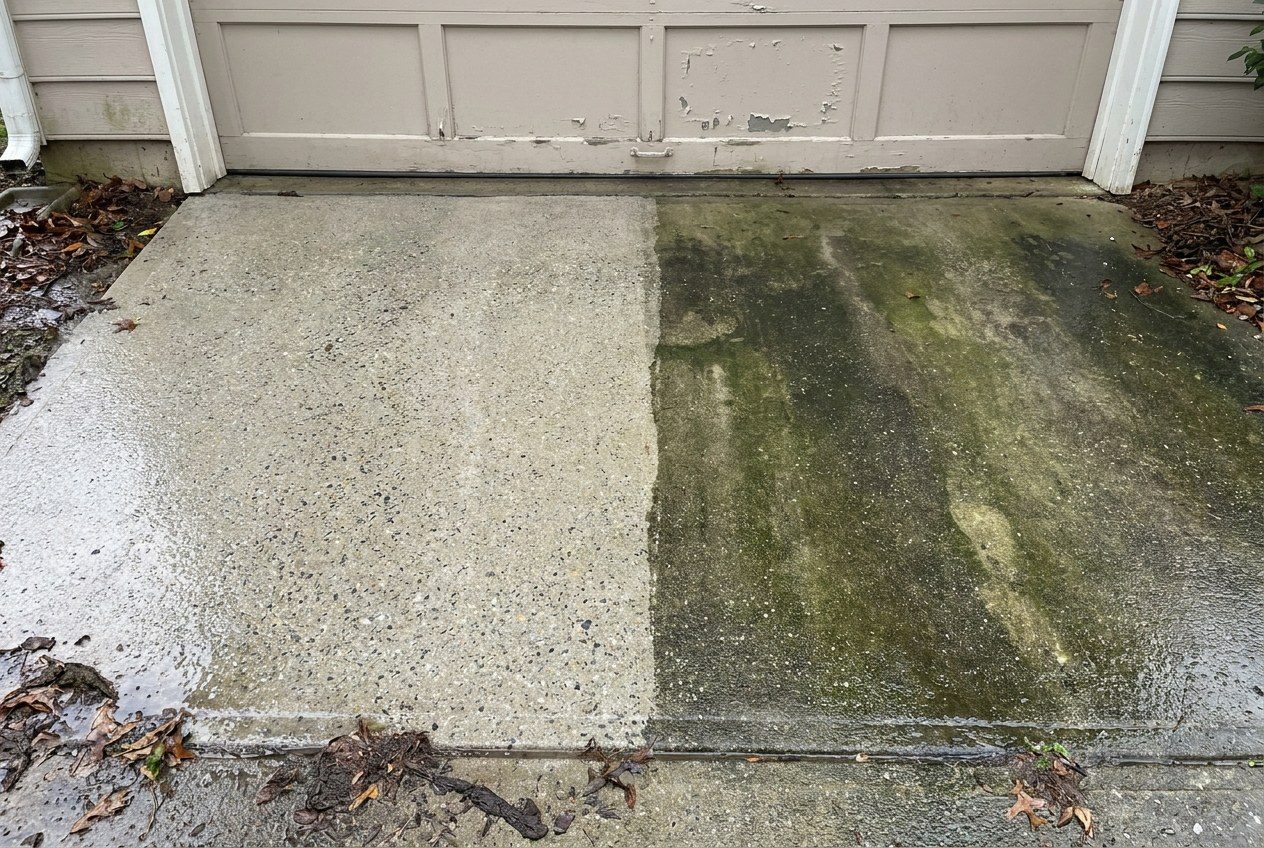
Cleaning concrete block foundation surfaces in fall, before winter sets in across Hope Mills, NC, is one of the most effective maintenance steps you can take to protect your home's structural base from biological growth and freeze-thaw damage. By the time October arrives, many homeowners notice the same thing: a green, gray, or black crust forming along the base of their home. It was not there in summer. Now it is, and it seems to have appeared fast. That is not your imagination. Fall creates nearly perfect conditions for biological growth on concrete block, and once the cycle starts, it compounds year over year if nothing interrupts it.
The base of a foundation sits at ground level, which means it is the first surface to absorb morning dew, irrigation overspray, and the moisture that rises from soil as the ground starts cooling. Concrete block is porous, and that porosity is what makes it a target. Algae spores land on the damp surface, find enough moisture and residual warmth to germinate, and establish a colony within weeks. Lichen follows behind, feeding on the algae and embedding itself into the block surface. By the time you notice a visible crust, the growth has usually been there longer than you think.
#What Is Actually Growing on the Foundation?
Most of what you see on a concrete block foundation in fall is one of two things, and they behave very differently once they are there.
- Algae is a single-organism growth. It colonizes moist surfaces and produces a slick, green or black film. It sits primarily on top of the substrate and has not anchored into the concrete. This makes it the easier of the two to remove.
- Lichen is a symbiotic organism made up of fungus and algae living together. It produces a crusty, often gray or greenish-white layer that physically bonds to the surface. The fungal component grows structures called rhizines that penetrate the pores and surface of the block to anchor the colony in place.
That anchoring is exactly why lichen is a different problem from algae. Rinsing with a garden hose dislodges algae. Lichen does not lift that easily. It requires mechanical force, appropriate dwell time with a cleaning solution, and in many cases multiple passes to fully break the bond it has formed with the concrete. Left alone season after season, the rhizines work deeper into the block, and the affected area grows.
The biological acids that lichen produces as part of its natural chemistry slowly etch into concrete and masonry surfaces over time. This is not immediate visible damage, but it is cumulative. According to the National Park Service's preservation guidance on masonry, lichen is recognized as one of the biological agents that contributes to the long-term deterioration of stone and masonry surfaces through both physical penetration and chemical weathering.
#Why Does Fall Specifically Make This Problem Worse?
Fall accelerates foundation growth for a straightforward reason: the combination of cooling air temperatures and sustained ground moisture is exactly what algae and lichen need to thrive.
During summer, surface temperatures on concrete can get hot enough to slow or kill biological growth in exposed areas. Once September and October arrive, those temperatures drop and the surface stays damp longer after each rain or dew event. Shade from trees and the low angle of fall sun means the north and east-facing sides of a foundation may stay wet for hours after sunrise. Leaves that accumulate against the base of the house trap moisture further and add organic material that feeds growth.
| Characteristic | Algae | Lichen |
|---|---|---|
| Appearance | Green, black, or slimy film | Crusty, gray, greenish-white patches |
| Attachment to block | Surface-level, minimal penetration | Deep anchor via rhizines into block pores |
| Removal difficulty | Moderate, responds to pressure washing | Higher, requires sustained pressure, dwell time, and sometimes multiple passes |
| Risk to concrete | Cosmetic plus surface moisture retention | Cosmetic plus chemical etching and physical penetration over time |
| Best time to address | Before it spreads laterally | Before it penetrates deeper and hardens further through winter |
#Does Pressure Washing Actually Remove Lichen, or Just the Surface Layer?
Done correctly, pressure washing removes lichen fully, including the rhizines anchored into the block, though it requires more preparation and attention than blasting off algae. The key variables are pressure, nozzle selection, and whether a cleaning agent is used to break down the lichen before the mechanical work begins.
A pre-treatment with an appropriate biocidal or alkaline cleaning solution helps kill the lichen colony and loosen the bond between the rhizines and the concrete. Without pre-treatment, you can strip the visible surface of the lichen while leaving living root structures behind. Those remnants regrow. With proper dwell time and then a pressure wash pass using the right nozzle angle, the detached lichen lifts cleanly from the block.
On concrete block specifically, the approach matters. Block has a textured, open surface with more porosity than poured concrete or brick. Too much pressure applied too close can erode the surface of the block itself. A professional understands the difference between enough pressure to do the job and so much that it damages the substrate. The same precision applies when handling driveway and concrete cleaning, surface type always determines the correct method.
#Why Fall Is the Right Time to Clean a Foundation in Hope Mills, NC
Timing matters more than most people realize. Cleaning a foundation in spring feels intuitive because you are coming out of winter and things look dirty. But cleaning in fall accomplishes something different and arguably more important: it removes the biological growth before the freeze-thaw cycle begins.
Here is the practical concern. Biological growth on a porous surface retains moisture. Lichen rhizines embedded in block pores hold water inside those pores. When temperatures drop below freezing, that trapped water expands. Over enough cycles, that expansion causes micro-fracturing of the block surface. This is called freeze-thaw spalling, and it is a slow process that compounds over years. You are not going to see visible spalling after one winter, but a foundation that carries heavy lichen growth through five or ten winters accumulates surface damage that a clean foundation would not.
The same principle holds for other exterior surfaces. If you are scheduling fall maintenance, it is also worth reviewing the condition of your siding and trim, house washing in the Fayetteville area addresses the same biological growth patterns on vertical surfaces before winter locks them in.
Walk around the perimeter of your home and look at the bottom two feet of the foundation. Press gently on any visible green or gray crust. Algae will smear. Lichen will feel hard and resist movement. If the crust has been there long enough to feel almost cemented to the block, that is lichen with established anchor points, it will need professional attention before winter.
#What Pressure Washing Achieves That a DIY Rinse Does Not
A garden hose and a scrub brush can remove fresh, light algae from a smooth surface. On textured concrete block with established lichen colonies, it does not get the job done. The surface area inside the texture of the block, plus the depth of the rhizine anchors, requires sustained mechanical force that a garden hose does not produce.
Professional pressure washing also reaches the base of the foundation properly. Cleaning the lowest four to six inches of a foundation means working close to grade, which is awkward and often results in incomplete coverage when done by hand. A pressure washer with the right surface-cleaning attachment or a properly angled wand covers that zone thoroughly and evenly.
The other factor is the cleaning chemistry. The right pre-treatment products are specifically formulated to kill biological growth rather than just lift it. That matters for lichen in particular, because if the organism is not killed at the root, regrowth happens faster than you would expect.
If you are in Hope Mills, NC and the base of your foundation has visible crust, patches of gray or green, or a film that has clearly been building for more than one season, fall is the practical window to address it before temperatures drop and the growth gets locked in for winter.
#Common Questions
Can I pressure wash my own concrete block foundation, or should I hire someone?
Light algae on a foundation in good condition can often be rinsed off by a careful homeowner with a consumer-grade pressure washer. Lichen is a different situation, it requires pre-treatment chemistry, the right nozzle selection, and an understanding of how much pressure concrete block can safely handle before the surface erodes. If the growth is crusty, covers a significant area, or has been building for multiple seasons, hiring a professional is the practical call.
How long does it take for lichen to come back after pressure washing?
Regrowth rate depends on the moisture conditions around the foundation. A north-facing wall with poor drainage and overhanging vegetation will regrow faster than a sunny, well-drained exposure. When lichen is properly killed and removed rather than just surface-scraped, regrowth is slower because the colony has to re-establish from spore rather than from surviving root structures. Annual or biennial cleaning is a reasonable maintenance interval for most homes in this region.
Is the lichen on my foundation actually damaging the concrete block?
Yes, over time. The damage is slow and cumulative rather than immediately visible. The rhizines physically penetrate the block surface, and the organic acids produced by the lichen chemically etch into the concrete. Add freeze-thaw cycles that exploit moisture trapped by biological growth, and a foundation that carries heavy lichen through multiple winters will show more surface deterioration than one that is kept clean. It is not an emergency, but it is a real process, and fall is the most efficient time to interrupt it.
What should I do about drainage or landscaping to slow regrowth after cleaning?
Keep mulch and soil pulled back from the base of the foundation so the block face can dry out after rain. Trim shrubs and plants that press against the foundation or create permanent shade at ground level. Make sure downspout extensions are directing water away from the base of the house. None of these steps eliminate biological growth entirely, but reducing the time the foundation stays wet slows the regrowth cycle noticeably.