 Jetway
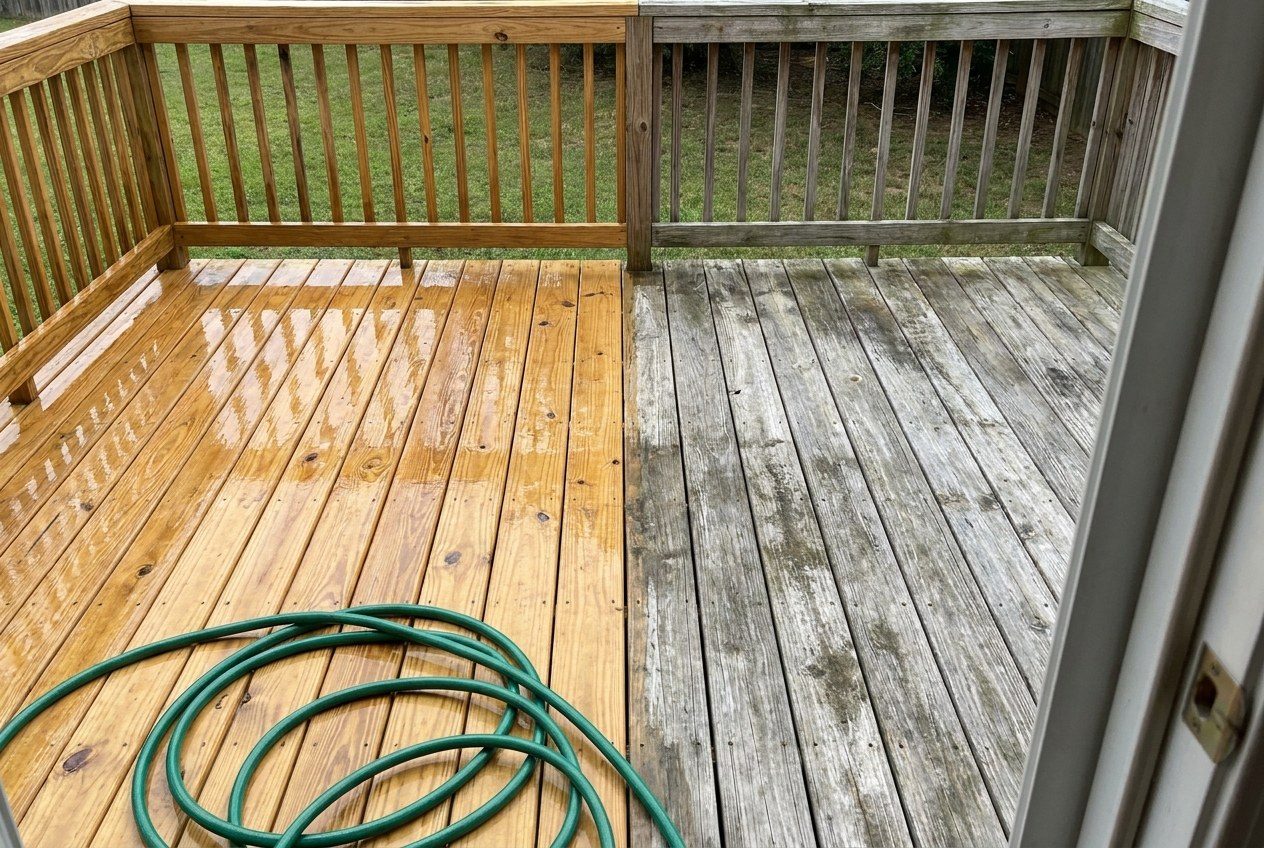
- Organic debris and mold accumulate at the foundation line during summer and accelerate upward once fall moisture arrives, making early autumn the right time to clean.
- The foundation line is where biological growth almost always starts before migrating up siding and into wall cavities.
- Pressure washing the exterior foundation removes the organic food source that mold spores need to travel and take hold higher on the wall.
- Hope Mills, NC homeowners deal with a combination of summer humidity, pine pollen, and leaf debris that makes this problem more persistent than in drier climates.
- Low-pressure soft washing is usually the right technique for porous masonry and older mortar at the foundation line, while higher pressure suits concrete block and poured foundations in good condition.
Pressure washing your foundation exterior this fall in Hope Mills, NC is one of the highest-return maintenance tasks you can do before winter arrives. Look down at the base of your house right now. If you see a dark band running along the foundation wall, that is not just dirt, it is a living layer of algae, mold spores, and decomposing organic matter that spent the entire summer building up, and it is about to get worse.
Fall in Hope Mills brings a specific combination of conditions: dropping temperatures, rising overnight humidity, and a steady rain of leaves and pine needles. All of that organic material lands at the lowest point of your exterior wall and sits there, trapping moisture against the masonry. Mold does not need much. A little water, a little organic matter, and a surface that stays damp for more than a day or two is enough to let a colony root in and start climbing.
Mold at the foundation line in October is not the same problem as mold at the foundation line in March. By spring, colonies that started at ground level in fall have had an entire wet winter to migrate upward through mortar joints, gaps in siding, and along the water-wicking path of your wall sheathing. Cleaning in fall interrupts that cycle before it starts.
#How Does Mold Actually Travel Up an Exterior Wall?
Mold moves upward through a combination of spore dispersal and capillary action, not through dramatic visible spread. Spores released from a ground-level colony get carried by wind, rain splash, and foot traffic up onto siding, trim, and brick courses above the foundation. Once they land on a surface that stays damp, they set new roots.
Capillary action plays a separate role. Porous materials like brick, stucco, and wood siding absorb water from the ground up. If the foundation line is already coated in a mold biofilm, that film creates a continuous damp surface that moisture travels along. Consistent moderate dampness is enough, the wall does not have to be soaking wet.
According to the U.S. Environmental Protection Agency, mold can begin to grow on a surface within 24 to 48 hours of it becoming wet, provided spores are present. At a foundation line that already hosts an established colony, spores are always present. The question is only whether conditions favor them spreading further.
The foundation line also tends to accumulate what mold needs to eat: pollen, decomposing leaves, soil particles, and wood debris. All of that sits in the gap where your siding meets your foundation, feeding the biology already living there. Removing it removes the food supply. This is also why a thorough house washing that includes the foundation line outperforms one focused only on upper siding.
#What Makes the Hope Mills Area Particularly Prone to This Problem?
The short answer is humidity combined with a long growing season and heavy tree cover. The Sandhills region around Hope Mills, NC sees warm, humid summers that extend well into September. The biological growth season does not wind down as quickly as it does further north, meaning mold, algae, and lichen have more time to establish before the first genuine cold snaps arrive.
Pine trees shed pollen and needles that land in the gap between siding and foundation and do not break down quickly. That slow decomposition keeps a consistent layer of organic material at the foundation line from late winter all the way through fall. By October, some homes have months of accumulated debris sitting against the masonry.
Run your hand along the foundation wall on the shaded side of your house. If it feels slick, greasy, or noticeably cooler and damper than the sunny side, biological growth is almost certainly present even if you cannot see obvious dark staining yet. That slick texture is algae or early-stage mold biofilm.
#Pressure Washing vs. Soft Washing at the Foundation Line: Which Is Right for Your Home?
The answer depends on what your foundation is made of. Poured concrete and solid concrete block in good condition can typically handle direct pressure washing without damage. Older brick, mortar joints that show any cracking or spalling, stucco, and EIFS (synthetic stucco) systems need a low-pressure soft wash approach using a cleaning solution rather than raw water pressure to do the work.
| Approach | Best Suited For | How It Works | Main Caution |
|---|---|---|---|
| Pressure Washing (high volume, direct) | Poured concrete, solid concrete block, newer brick in good condition | Mechanical force removes biofilm, soil, and debris from hard, non-porous surfaces | Can erode older mortar joints or damage cracked masonry if pressure is too high |
| Soft Washing (low pressure, cleaning solution) | Older brick, stucco, EIFS, painted masonry, any surface showing mortar wear | Biodegradable detergent kills biological growth at the root; low pressure rinses without impact damage | Solution needs adequate dwell time to be effective; nearby plants may need rinsing after |
Using the wrong approach does real damage. High pressure against soft mortar blasts out the binder between bricks and opens gaps where water, and therefore mold, can get behind the masonry entirely. If you are unsure what your foundation can handle, err toward lower pressure and a cleaning agent. The same principle applies when evaluating driveway and concrete cleaning adjacent to the foundation, where surface hardness and age also dictate which method is appropriate.
#What Should Actually Be Cleaned During a Foundation Line Service?
A thorough foundation line cleaning is not just spraying the visible masonry. The debris that feeds biological growth collects in the gap between the bottom course of siding and the top of the foundation wall. That joint needs to be cleared of leaves, pine needles, and compacted dirt before the surface itself is treated.
- The foundation wall face from grade level up to where siding begins
- The joint or gap between the siding bottom and the foundation top
- Window wells and below-grade areaway walls if present
- Any concrete splash blocks or pavers sitting against the foundation that trap moisture
- A foot or two of adjacent flatwork like walkways or steps that drain toward the foundation
Cleaning only the visible face of the foundation and leaving the debris-packed joint above it means the problem returns faster. The organic matter in that joint feeds new spore growth through the winter.
#How Long After Cleaning Before Mold Returns?
On a surface that has been properly cleaned and treated, regrowth typically takes longer than on a surface that was only rinsed. The key variable is whether the biological matter was killed at the root or just dislodged. A cleaning solution that reaches into the pores of masonry and breaks down the mold at its attachment point leaves less viable material behind for a new colony to anchor to.
No exterior surface stays clean forever in a humid climate. Fall cleaning does not eliminate the problem permanently. What it does is reset the biological clock going into winter, so that by the time spring arrives, you are not starting from a position where mold has already spent six months climbing toward your eaves. Annual cleaning at the foundation line is a maintenance habit, not a one-time fix.
For most homes in the Hope Mills area, pressure washing the foundation exterior in fall and again in late spring after pollen season manages the biological load well enough to prevent visible staining from reaching the upper portions of the wall.
#Common Questions
Can I just use a garden hose and scrub brush on my foundation line instead of hiring a pressure washer?
A garden hose and brush will remove loose debris but will not generate enough force to break up an established mold biofilm on masonry. You would need to pair it with a cleaning solution and significant scrubbing time to get comparable results on a surface with active growth, and you still would not reach into the pores of porous concrete or brick the way a proper soft wash solution does. It is a reasonable approach for light surface dirt on a smooth surface, but not for biological growth at the foundation line.
Is it safe to pressure wash near my foundation plantings and flower beds?
Most cleaning solutions used in soft washing are biodegradable and safe for established plants when rinsed thoroughly after application. A few precautions help: wet down the surrounding vegetation before starting so the leaves are less absorbent, and rinse them again after the cleaning solution has been applied and rinsed from the foundation. Keep the spray angled toward the foundation surface, not the bed, to avoid compacting soil and damaging root zones.
Will cleaning the foundation line actually stop mold from getting into my walls?
Exterior foundation cleaning removes the surface colony and the organic material that feeds spore migration upward, which significantly reduces the biological load on the exterior wall system. It does not address moisture intrusion through cracks, failed caulking, or poor grading that directs water toward the foundation, those are separate issues. But for the common pattern of surface mold migrating up from ground level, removing the source is the most direct intervention available.
How do I know if what I am seeing is mold versus algae or just dirt?
Green or greenish-black growth on the shaded side of a foundation is almost always algae or algae mixed with mold. True dirt tends to be brown or gray and brushes off relatively easily when dry. Algae and mold have a slight slick or greasy texture when damp and often reappear in the same spots year after year because spores are already embedded in the surface. If the dark staining is heaviest on the north-facing or heavily shaded side of your foundation, it is biological, not soil accumulation.
If the foundation line on your home is showing dark staining or you want to get ahead of the problem before winter sets in, Jetway Pressure Washing and Cleaning Service works in Hope Mills, NC and the surrounding area. Give us a call and we can take a look at what you are dealing with and talk through the right approach for your surface type.