 Jetway
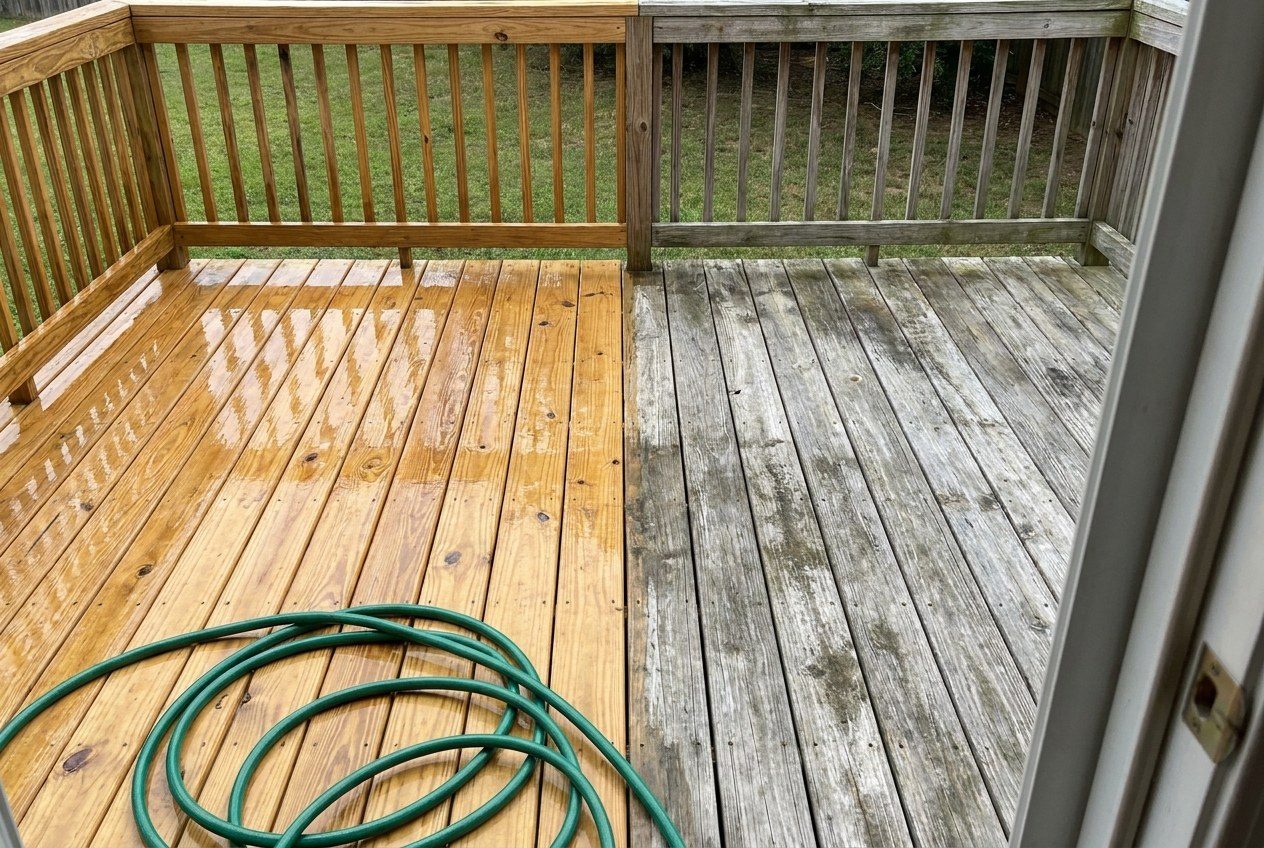
- Moss on concrete driveway surfaces in Cumberland County NC begins anchoring in early fall when temperatures drop and moisture increases, making the region an ideal environment for rapid colonization.
- The rhizoids moss sends into concrete are shallow in early fall but deepen significantly by winter, so treating it now requires far less effort and causes less surface disruption.
- A concrete driveway with a north-facing slope or heavy tree canopy overhead is the most common place moss gets a foothold first.
- Pressure washing in fall removes moss before it completes its reproductive cycle, reducing how much returns the following season.
- Waiting until spring means dealing with fully established moss mats that have spent months bonding to the concrete surface.
Moss on a concrete driveway in Cumberland County NC begins colonizing in fall, not spring, when most homeowners in Hope Mills first notice it. Spring is just when it becomes impossible to ignore. The actual colonization happens in fall, when the conditions moss needs align almost perfectly with what our regional climate delivers every October and November.
Moss is not a flowering plant. It has no roots in the traditional sense and no need for soil. What it needs is a rough, porous surface, consistent moisture, indirect light, and temperatures that stay cool without freezing hard. A concrete driveway in Cumberland County checks every one of those boxes from about mid-September through December.
#How Does Moss Actually Anchor to Concrete?
Moss attaches using structures called rhizoids, thin filament-like anchors that penetrate the surface layer of concrete rather than growing through it the way plant roots grow through soil. According to NC State Extension, mosses are among the most resilient non-vascular plants in the Southeast because they can survive desiccation and then rehydrate and resume growth once moisture returns.
In early fall, those rhizoids are shallow. The moss has just landed, usually carried by wind or water runoff as spores too small to see. It is anchored enough to stay put but has not yet had months of wet weather to work its filaments deeper into the concrete's pores and micro-cracks.
Concrete is not as smooth as it looks. Poured and finished concrete has surface texture, air pockets, and micro-cracks that give moss spores an immediate place to lodge. Older concrete that has been exposed to years of freeze-thaw cycles is even more porous, giving rhizoids more purchase to grip.
By the time December arrives, those rhizoids have been working steadily through two or three months of wet North Carolina fall weather. The moss mat has thickened, begun trapping more moisture underneath itself, and started creating its own microclimate that accelerates further growth. That is a very different cleaning job than what you face in early October. For a closer look at what professional driveway and concrete cleaning involves at different stages of moss growth, that page walks through the process in detail.
#What Makes Cumberland County Fall Conditions Ideal for Moss Growth?
Fall in Cumberland County brings exactly what moss wants. Daytime temperatures drop into the 50s and 60s, nights get cool, and rainfall is consistent without being extreme. There is no hard freeze to kill off early colonies, and tree canopy that was shading the driveway all summer continues to drop leaves that trap moisture against the concrete surface.
Shade is the other factor. A driveway with mature trees overhead or one that faces north rarely gets the direct afternoon sun that would dry the surface and slow moss development. Many properties in Hope Mills have exactly that setup, and the moss takes full advantage of it from the first cool week of September onward.
| Factor | Early Fall Treatment | Waiting Until Spring |
|---|---|---|
| Rhizoid depth in concrete | Shallow, recently anchored | Deep, months of penetration into pores and micro-cracks |
| Mat thickness | Thin, early-stage growth | Dense, layered mats with trapped organic debris underneath |
| Spore reproduction | Incomplete cycle, fewer spores released | Full reproductive cycle completed, heavier reseeding of surface |
| Pressure needed to remove | Lower pressure sufficient for clean removal | Higher pressure often required, more risk to older concrete |
| Likelihood of return next season | Lower, spore bank is smaller | Higher, moss had the full season to spread reproductive structures |
#Why Does Waiting Until Spring Cost You More Work?
Spring cleaning feels logical. Winter is done, you walk outside and see the green coating on your driveway, and the weather is finally pleasant enough to deal with it. The problem is that moss has had five or six months to settle in by then.
A fully established moss mat physically traps soil, leaf debris, and water beneath it, which creates a layer of organic matter that bonds to the concrete. Removing that layer cleanly without etching or damaging the surface is harder than removing thin early-stage growth. More passes, more water, more time on the job.
Moss reproduces by releasing spores, and it typically completes that reproductive cycle during late winter and early spring. If you wait until April to remove it, the moss has already released spores across your driveway, your walkways, and into the lawn edges. You are cleaning up the parent colony while the next generation is already seeding into every low spot and shaded crack nearby.
Treating in early fall interrupts that cycle before it completes. The colony you remove in October never gets to reproduce. That does not mean moss will never return, but it does mean you are not starting next season with a heavier spore load than you had this year.
It is also worth noting that moss rarely stays confined to the driveway. Spores migrate to siding, roof surfaces, and gutters through the same wind and runoff patterns that brought them to the concrete in the first place. If your roof or gutters are showing similar discoloration, roof cleaning addressed in the same fall window prevents those colonies from maturing and reseeding the driveway the following season.
#What Should You Look for on Your Driveway Right Now?
Walk your driveway on a morning after rain, when any moss present will be its most visible green. Early-stage moss often looks like a faint greenish or gray-green haze rather than the thick fuzzy mat most people picture. It frequently starts at the edges where water pools, in low spots where runoff slows, and in the strip near the house where shade is heaviest.
- Green or gray-green discoloration along driveway edges and at low points
- A slightly slippery texture underfoot on shaded sections
- Dark staining that does not wash off in rain but spreads outward from shaded areas