 Jetway
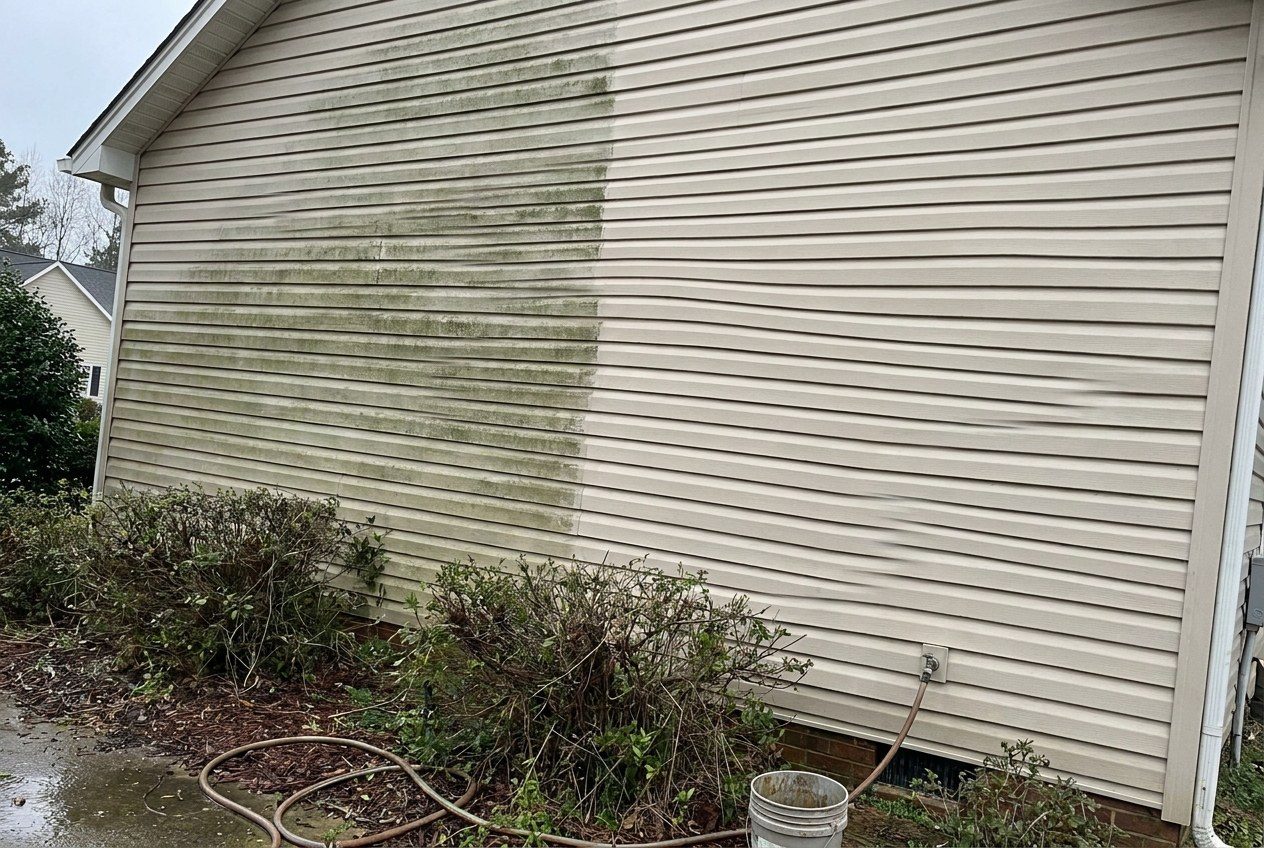
Pressure washing concrete before winter in Cumberland County NC is one of the most practical steps a homeowner can take to prevent freeze-thaw damage to driveways, walkways, and other flatwork. Your driveway may look acceptable from the car window, a little gray, a dark streak near the edge, some green along the expansion joints, but between now and March those surfaces will go through repeated freeze-thaw cycles, and anything trapped in the concrete pores right now will do its worst work during that time.
This is not about appearances. It is about the physics of what happens to a porous material when it holds moisture through a hard freeze. Getting concrete cleaned before temperatures drop is one of the more practical things a homeowner in Hope Mills or anywhere else in Cumberland County can do to protect a surface that costs real money to repair or replace.
#What Actually Happens to Concrete During a Freeze-Thaw Cycle?
Concrete expands when water inside it freezes. Concrete looks solid, but it is full of tiny pores and capillaries that absorb water. When that water freezes, it expands by roughly nine percent in volume, as documented by the Portland Cement Association. That expansion pushes outward against the surrounding material. Do that enough times over a single winter, and the surface begins to crack, flake, and spall.
One cold night does not ruin a driveway. The damage accumulates over cycles. The surface freezes, thaws, absorbs more water, freezes again. Each cycle widens existing micro-cracks slightly. After several seasons of this without cleaning or sealing, what started as hairline cracking becomes visible surface deterioration that is expensive to address.
#Why Does Biological Growth Make Freeze-Thaw Damage Worse?
Algae, mold, mildew, and lichen are not cosmetic problems. They act like a sponge held against the concrete surface. Bare concrete dries out between rain events. Concrete covered in algae or lichen stays wet much longer because the organic material holds moisture against the pores and slows evaporation.
Lichen is particularly aggressive. It produces weak acids that etch into concrete over time, and its root-like structures called rhizines penetrate the surface, giving moisture a direct path into the pore structure below. Removing it before winter eliminates that pathway.
Debris plays a similar role. Decomposing leaves piled against a concrete edge or in a low corner hold moisture and create a wet environment that stays in contact with the surface through cold nights. It is not dramatic, but it is consistent, and consistency is what causes freeze-thaw damage. Professional driveway and concrete cleaning removes all of this material before the first hard freeze locks it in place.
#Does Cumberland County Get Enough Freezing Weather to Matter?
Yes. Cumberland County sits in a climate zone that sees regular overnight freezes from roughly late November through February, with temperature swings that often put daytime highs above freezing and nighttime lows below it. That pattern, warming above 32 degrees during the day and dropping below it at night, is exactly the freeze-thaw cycle that stresses concrete most.
| Approach | What It Does | When to Do It | Realistic Outcome |
|---|---|---|---|
| Do nothing | Leaves biological growth and debris holding moisture in pores | Year-round by default | Accelerated surface cracking and spalling over multiple winters |
| Pressure wash only | Removes algae, mold, debris, and surface contaminants | Fall, before first hard freeze | Reduces moisture trapped in pores; extends surface life |
| Pressure wash then seal | Cleans surface and applies a barrier against water penetration | Fall, after cleaning and before temps drop consistently | Best protection against freeze-thaw damage for that season |
A sealer applied over dirty concrete does not work well. The biological material and oils underneath prevent proper adhesion. Cleaning first is not optional if sealing is the goal.
#What Should You Look for on Your Concrete Right Now?
Before calling anyone, walk your driveway and any concrete flatwork around the house. Here is what to look for:
- Dark green or black streaking, especially in shaded areas or along edges where water runs
- A slick or slightly fuzzy texture on the surface, which usually indicates algae or lichen
- Hairline cracks that run along or across the slab, particularly near joints
- Areas where the surface looks rough or slightly raised, which can be early spalling
- Leaf buildup or debris packed into corners and along the garage threshold
If the surface is mostly clean and dry with no visible biological growth, you may be in reasonable shape heading into winter. If you are seeing green, black, or dark streaking across more than a small portion of the surface, cleaning before the first freeze is worth scheduling this fall. The same applies to the exterior of the house, if you are already addressing the concrete, pairing that with house washing before winter removes biological growth from siding and trim that accumulates through the same warm, wet fall conditions.
#Is Fall Pressure Washing Worth It If the Concrete Already Has Cracks?
Cleaning is still worth doing, and arguably more important in that situation. Existing cracks are open channels for water to get deeper into the slab. Biological growth in and around those cracks makes the problem worse by holding moisture in place. Cleaning removes that material, and it also gives you a clear look at the condition of the surface so you can decide whether crack repair or sealing makes sense before winter arrives.
Pressure washing does not fix cracks. It clears the surface so you can actually see what you are dealing with. Cracks wider than a hairline should be filled with a concrete repair product before any sealer goes down. A pressure washer can clean out the debris inside the crack to help the repair material bond properly.
Waiting until spring to deal with cracked concrete means going through another full winter of freeze-thaw cycles with open pathways for water. Small cracks that could have been filled inexpensively in October sometimes become sections of spalling concrete by April that require more significant repair work.
Jetway Pressure Washing handles concrete and driveway cleaning for homeowners throughout the Hope Mills and Cumberland County area. If you want your flatwork cleaned before temperatures drop this season, get in touch and we can schedule a time that works.
#Common Questions
How cold does it have to get to cause freeze-thaw damage to concrete?
Freeze-thaw damage begins at 32 degrees Fahrenheit, the point where water turns to ice and expands inside the concrete pores. Cumberland County regularly sees overnight lows below that threshold from late November through February, with daytime temperatures rising back above freezing, that warming and refreezing pattern is what causes cumulative damage over a season.