 Jetway
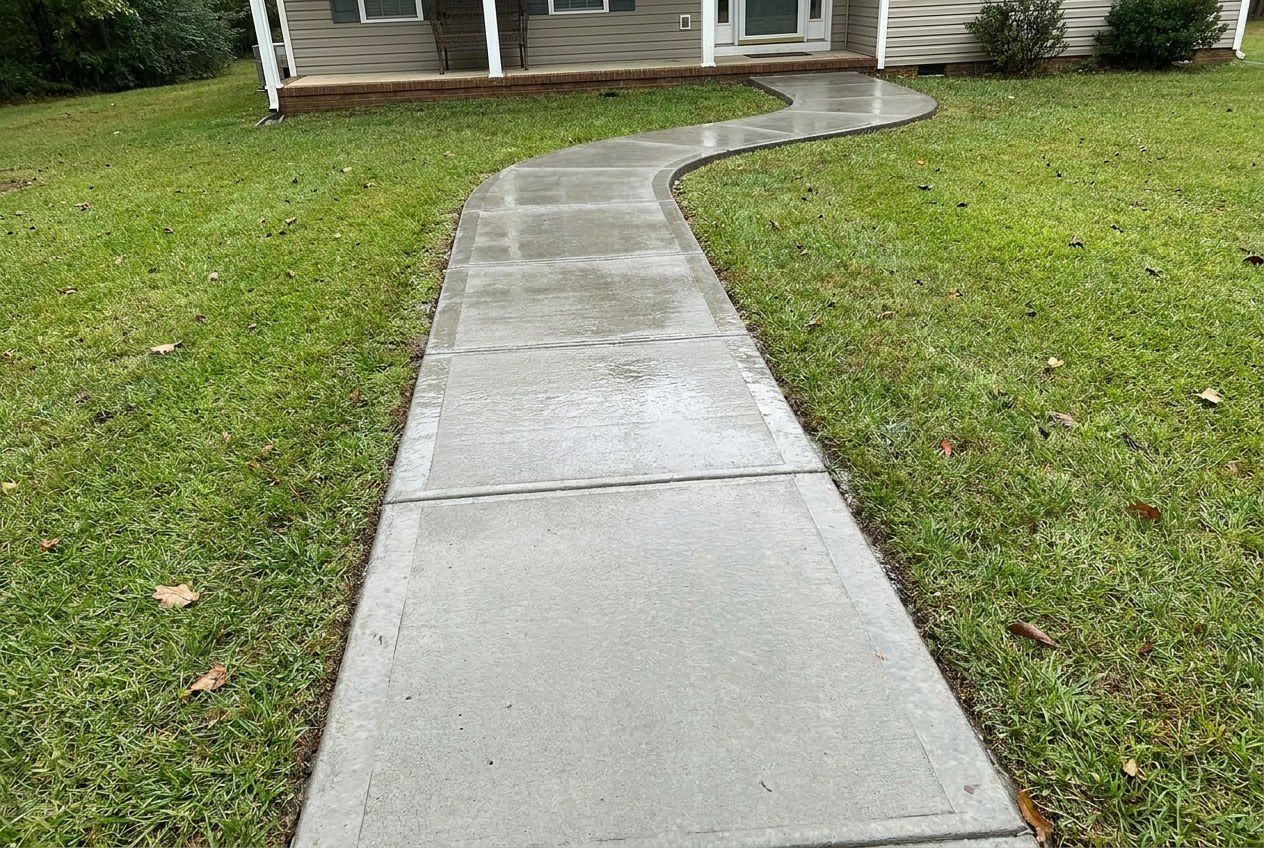
- Organic debris trapped under furniture legs during winter accelerates concrete staining and biological growth on your patio.
- Fall is the right time to pressure wash concrete patio before winter in Hope Mills, NC, before temperatures drop and furniture goes into storage.
- Pressure washing removes the layer of pollen, leaf tannins, mildew, and grime that would otherwise sit undisturbed for months.
- Letting moisture and debris sit on bare concrete over winter creates conditions where algae, mold, and deep staining take hold faster each year.
- A pre-storage cleaning is one of the simplest ways to make spring patio work easier and less expensive.
If you plan to pressure wash your concrete patio before winter in Hope Mills, NC, the moment to act is before you stack the chairs, not after the damage is already done.
Most people think about cleaning the patio in spring, after everything looks rough after winter. That instinct is understandable, but it gets the timing backwards. The damage is already done by the time spring arrives. It happened in October when you stacked the chairs and dragged the table to the side of the house.
Here is what actually happens. When outdoor furniture sits on a concrete surface for months, it traps whatever organic material is sitting underneath it. Leaf fragments, pollen residue, dirt, bird droppings, and moisture all get sealed off from sunlight and airflow. That is a near-perfect environment for mold, mildew, algae, and tannin staining to develop without any interference.
By the time you pull the furniture back out in April, the concrete underneath has been incubating biological growth for four to six months. Those dark rings, rust-colored halos, and greenish patches are not just cosmetic. They represent organic material that has had time to work into the pores of the concrete.
#Why Does Concrete Stain So Much Worse Under Furniture Legs?
Furniture legs concentrate both weight and moisture in a very small contact area, which makes them uniquely effective at causing stains. The leg itself may trap a small amount of debris and moisture right at the contact point. Over a winter, that concentrated damp spot becomes a reliable source of biological growth, rust transfer from metal feet, and tannin leaching from wood or synthetic materials.
Concrete is porous. According to the Portland Cement Association, concrete's open pore structure makes it susceptible to absorption of water, organic compounds, and minerals unless it is properly sealed. When debris sits wet on bare concrete for weeks or months, staining compounds have enough time to migrate below the surface layer, where standard cleaning struggles to reach them.
Tannins from decomposing leaves are one of the most persistent concrete stains. They start as a surface deposit but can penetrate deeply if left damp and undisturbed. A pressure wash before winter removes them before they have the chance to set.
#What Happens to an Unwashed Patio Over a Hope Mills Winter?
Hope Mills, NC, sits in a climate zone that does not get the brutal freeze-thaw cycles of northern states, but it gets plenty of moisture and moderate cold, which is its own problem for concrete. Wet concrete that cools and stays damp for long stretches allows biological growth to establish faster than many homeowners expect.
The region's mild winters mean the temperature stays in a range where mold and algae can continue growing slowly even in December and January, unlike areas where a hard freeze puts biological activity on pause. Combine that with the organic debris common in a North Carolina fall, including pine needles, oak leaves, and tree pollen residue from late-season plants, and you have a situation where an unwashed patio gets significantly worse between October and March.
When furniture sits on top of that mix through winter, you are essentially composting organic material directly onto your concrete surface. The result in spring is staining that is deeper, coverage that is wider, and biological growth that is more firmly established than it would have been if the surface had been cleaned before storage.
#Is It Worth Pressure Washing a Concrete Patio Before Winter?
Yes, and the reason is straightforward: cleaning a patio in fall is easier and faster than restoring one in spring. A pre-winter pressure wash removes debris, kills surface biological growth, and gives the concrete a clean surface to endure the off-season. A spring cleaning, by contrast, often requires more dwell time with cleaning agents, higher pressure passes, and sometimes multiple visits to address growth that has had months to establish.
For a full picture of what professional concrete cleaning covers, see our Driveway & Concrete Cleaning service page.
| Factor | Fall Pre-Storage Cleaning | Spring Restoration Cleaning |
|---|---|---|
| Staining depth | Surface-level; debris has not had time to set | Deeper staining common after months of contact |
| Biological growth | Light; can be removed with a standard wash | Heavier; may require pre-treatment and longer dwell time |
| Time and effort required | Typically less; surface is more responsive | Typically more; growth and staining are more established |
| Concrete condition going forward | Starts next season clean; easier to maintain | Starts clean, but prior damage may remain visible |
#What Can You Check Before Deciding Whether to Call Someone?
Walk your patio and look at the areas where furniture legs and chair feet have been sitting all summer. If you see dark rings, green tinting, or a general grayish-black discoloration in those spots, organic material is already working on the surface. That is the most important zone to clean before anything gets stored on top of it for months.
- Run your hand along the surface. A slightly slimy or slick texture indicates early biological growth, even if it is not visible yet.
- Look for leaf-shaped outlines pressed into the surface. Tannin staining from leaves follows their exact shape and can be surprisingly persistent.
- Check the corners and edges where debris collects and moisture sits longest. These areas grow algae and mildew faster than open, sun-exposed sections.
- If the concrete has not been cleaned in more than a year, it is worth cleaning regardless of what you can see. Surface buildup is not always obvious until water is applied.
A garden hose and a stiff brush can handle light dust and loose debris. For anything with biological growth, embedded tannin staining, or a year or more of accumulated grime, pressure washing is the practical solution. The mechanical force clears the surface layer in a way that scrubbing does not replicate.
#How Should You Time the Cleaning to Get the Most Out of It?
Clean the patio before you move the furniture, not after. That sounds obvious, but many homeowners move furniture to the garage first and then clean what remains in the open. The problem with that sequence is that the spots where furniture sat all summer never get cleaned, and those are exactly the spots most likely to stain and grow